Here are some of things that MiRo can do using some of the latest Artificial Intelligence (AI) technologies linked to its sensor and motor capabilities.
Listening and talking.
Miro becomes active when it hears the phrase “Hey Miro.” It is best to do this using the microphone. Voice activation allows people to easily engage with the robot using spoken language in a natural way. Miro processes language using AI speech recognition and a version of ChatGPT accessed through 5G internet.
Seeing and recognising.
Miro uses neural network AIs to process images from its camera eyes and can recognize objects such as a phone or a piece of fruit and respond in a playful way. Robots like MiRo go beyond the abilities of spoken language AIs like Siri and Google Assistant by using their senses to understand the world around them.
Non-verbal communication.



MiRo’s visual sense also allows the robot to recognise and respond to familiar gestures. You can show a victory sign, raise a single finger, give a “rock on” gesture, or wave. These gestures activate different responses from Miro.
Stroking and petting.
Like an animal pet you can also interact with Miro through touch. Miro responds through movement, sound, and coloured lights in its body and will respond positively to gentle stroking touch. Physical contact can also have a calming effect on people who interact with the robot in this way and may be useful in therapy settings.
Dancing.
Miro uses Shazam to identify and respond to music. You can ask Miro to play a song and watch or join in as it dances along creating a shared musical experience.
Scan the QR code with your phone camera to find out more about the Miro project
MiRo – robotic companion
Miro is an advanced biomimetic robot designed to interact with its environment through three key modalities: vision processing, audio processing and production, and touch. Its vision processing enables it to perceive and interpret its surroundings, recognizing objects and navigating autonomously. Through audio processing and production, Miro can both listen to commands and produce sound, allowing it to communicate naturally with users, respond to voices, and engage in interactive conversations. Lastly, Miro integrates touch sensors across its body, allowing it to react to physical interactions, which tie into its simulated emotional states, adjusting its behavior in response to different stimuli, much like a living companion. These modalities make Miro a highly interactive and responsive robotic system.
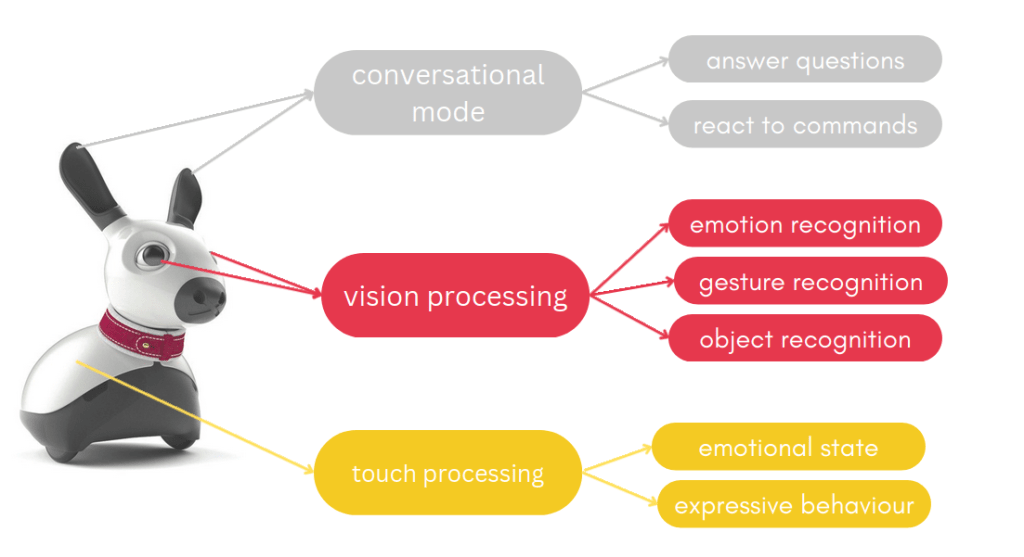
Vision and Recognition Capabilities
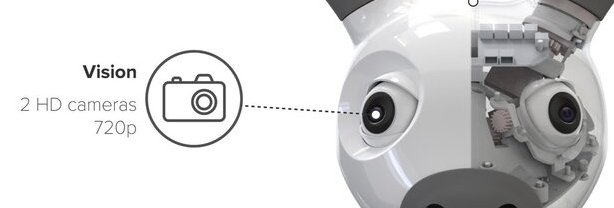
MiRo-e is equipped with advanced vision systems that enable it to engage intelligently with its environment. Using 720p HD cameras, MiRo-e performs gesture recognition, object recognition, and emotion recognition, all powered by deep neural network models. These systems allow the robot to process and classify visual inputs, recognizing human gestures, facial expressions, and objects in real time. This seamless interaction makes MiRo-e responsive and adaptive to its surroundings, providing a truly interactive experience.
Touch and Emotional Feedback
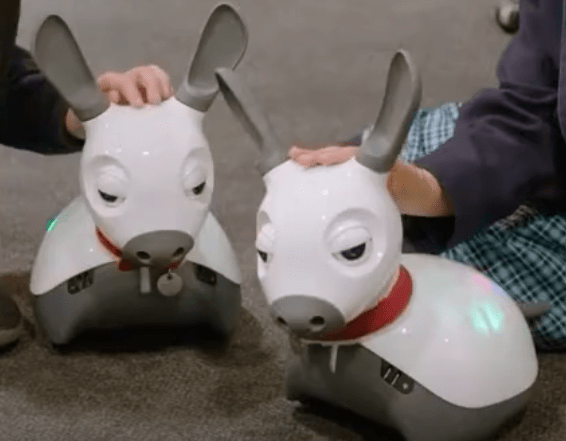
MiRo-e’s body is fitted with 28 capacitive sensors spread across its head and body, allowing it to react to various forms of touch, including stroking, tapping, and holding. These physical interactions directly influence MiRo-e’s emotional state, which is communicated through flashing LEDs, and an array of cosmetic joints such as moving eyelids, ears, and tail. Along with these expressive movements, MiRo-e can also produce sound through its audio engine, offering a full range of emotional responses that create a lifelike, interactive experience with users.
Speaking and Listening Abilities
MiRo-e features four 16-bit microphones and a loudspeaker, enabling it to listen to spoken commands, respond to prompts, and even recognize music. MiRo-e can follow voice prompts, answer questions, and dance when it hears music, adding a playful element to its personality. Although it works effectively with its built-in microphones, MiRo-e performs even better when paired with an external microphone. Its auditory and speech capabilities, combined with its ability to express emotions through sound and movement, make MiRo-e an engaging, interactive companion suitable for a variety of scenarios.
 Hey MiRo!